
Lukla airport: your honest guide to the Everest gateway

You have seen the videos: a tiny plane dropping onto a short, sloping runway. Lukla airport gets a lot of attention, and yes, it is short, and yes, flights get cancelled.
What we can tell you honestly: with the right plan, a delay is much easier to handle. It might still affect your trek, and we will not pretend otherwise.
This guide explains how the flight works, why it gets delayed, and how to plan so a hold-up does not wreck your trip. It is the same advice we give everyone on our Everest Base Camp trek.
What is Lukla airport?
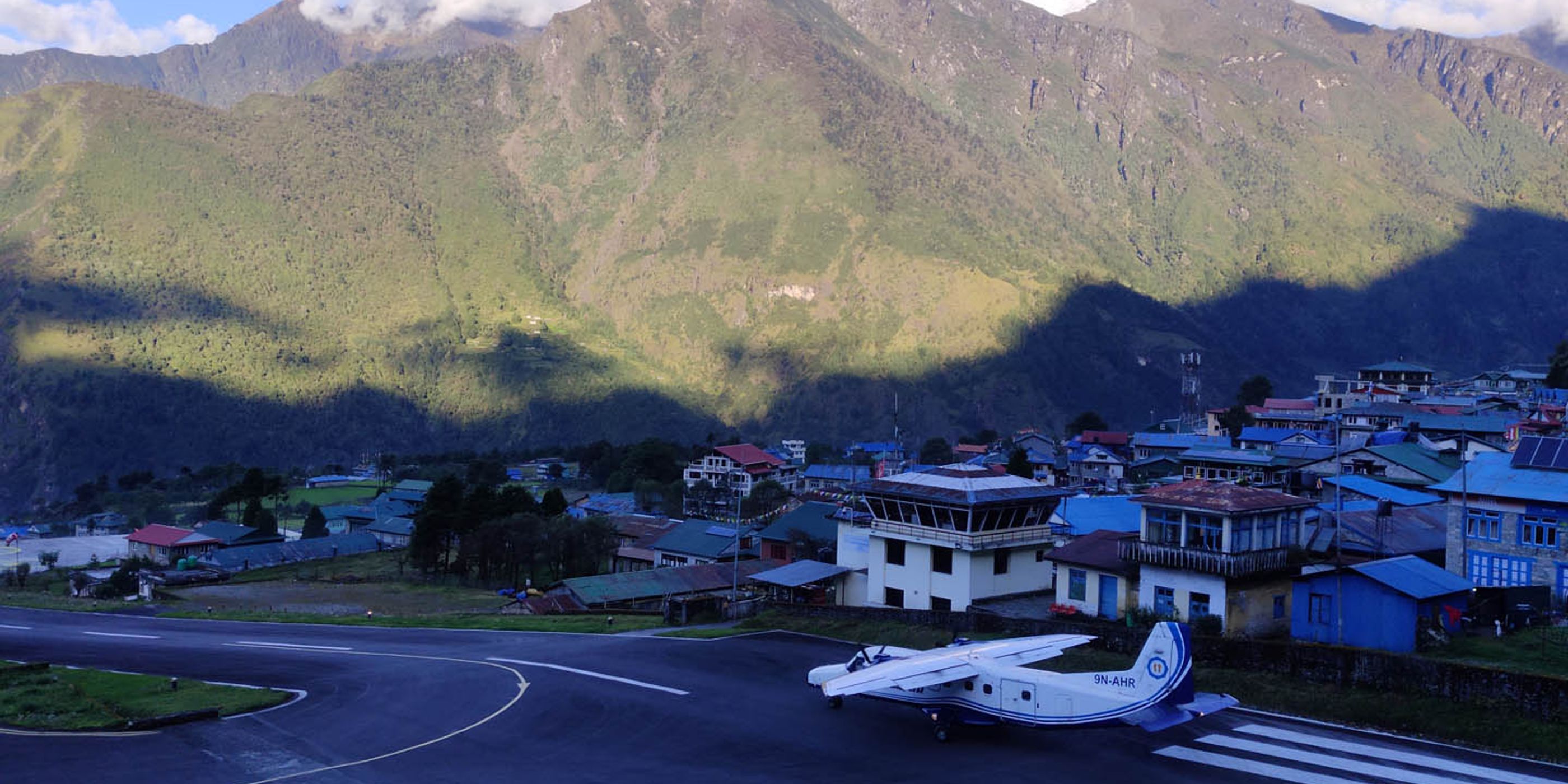
Lukla airport is officially called Tenzing-Hillary Airport, with codes LUA and VNLK. It sits at about 2,845 m (9,334 ft) in the Solukhumbu district of eastern Nepal. It is a common starting point for Everest Base Camp treks: you land and start walking.
The airport was built in 1964 under the supervision of Sir Edmund Hillary. It was renamed in 2008 after Tenzing Norgay and Edmund Hillary, the first two people confirmed to stand on Everest's summit.
The single runway is about 527 m long and slopes at a gradient of about 11.7%. That is far shorter than a typical big-city airport runway.
The media often calls it one of the world's most dangerous airports. That is a label, not an official ranking. Scheduled flights are run by small Nepali airlines, including Tara Air, Sita Air, and Summit Air, on small twin-engine planes such as the Twin Otter.
Kathmandu to Lukla flight or Ramechhap to Lukla: which will you fly from?
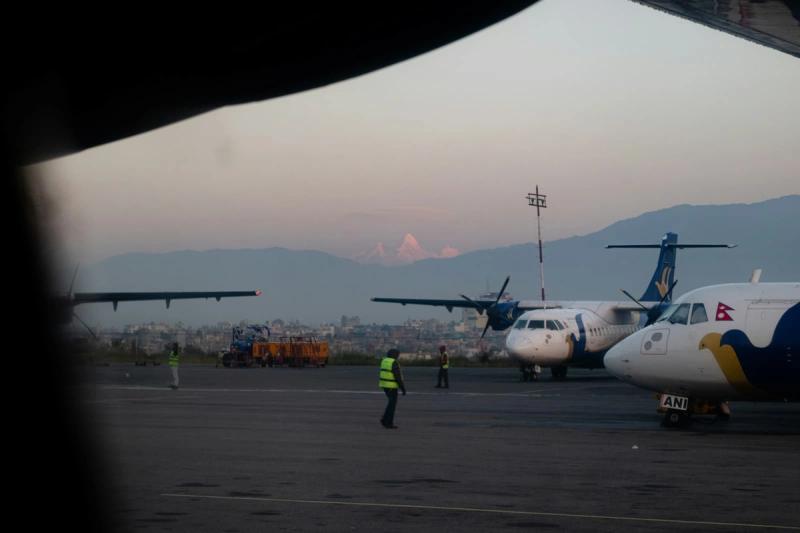
The flight from Kathmandu to Lukla takes about 30–35 minutes. But in busy trekking seasons, most Lukla flights do not leave from Kathmandu at all.
Nepal's aviation authority has moved most Lukla flights to Manthali airport in Ramechhap district to ease pressure on Kathmandu's airport. It first happened in 2019 and has been the peak-season pattern since 2022.
In 2024, the Manthali window was reported as spring (March to May) and autumn (October to December). This is the recent pattern, not a fixed rule.
Manthali is about 130 km by road from Kathmandu. Our trip pages describe the drive as 5–6 hours, which means a very early start, followed by a hop of about 20 minutes to Lukla.
Off-peak months usually fly direct from Kathmandu. We say "usually" because the exact arrangement is set by the authorities and can change from season to season. Your departure plan is confirmed closer to the time.
On our Luxury Everest Base Camp trip, an optional helicopter upgrade to skip the pre-dawn drive to Manthali may be possible at extra cost, weather and availability permitting.
Why Lukla flights get delayed or cancelled
The UK government's travel advice for Nepal says: "Internal flights in high mountain areas can be delayed by poor weather conditions and cancellations are common."
Mountain weather is the main cause. Poor weather and low visibility at Lukla, at Kathmandu or Manthali, or along the route can stop flights. There's no point pretending otherwise: this happens often.
After a bad-weather day, there is a backlog. Everyone who missed their flight needs a seat on the next ones. That's why one cancelled day can hold things up even after the sky clears.
Lukla flight cancellations in real life
Here are some real examples, all reported by Nepali newspapers:
- In October 2023, bad weather stopped flights for five days in a row. Several hundred to more than a thousand trekkers were stuck waiting in Ramechhap (The Himalayan Times, 11 Oct 2023).
- In October 2024, a two-day closure left more than 1,000 travellers waiting. Once flights resumed, about ten left within roughly an hour (The Rising Nepal, 16 Oct 2024).
- In 2026, Lukla was closed by bad weather on 25 September, and again on Friday 30 and Saturday 31 October, reopening on Sunday 1 November (The Kathmandu Post).
We share these not to scare you, but so you know what "common" really means. It's a normal part of trekking in the Himalaya.
What happens if your Lukla flight is cancelled
Here is the sequence, based on the advice from our local team:
- Rebook first. If a Lukla flight is cancelled, the first step is rebooking you on the next available flight.
- Consider a helicopter. If you're short of spare days, a helicopter flight may be possible, depending on the weather and availability. It costs roughly USD 500–550 per person. Helicopters need flyable weather too, so they aren't a guaranteed way out.
- Know the road-and-trail route. If neither planes nor helicopters can fly on the way in, a route via Salleri may be possible, subject to road and trail conditions. It involves a drive from Kathmandu to the Surke area, then a trek to Phakding. It generally takes about two days. It's a possibility, not a guaranteed fallback.
Who pays? Any extra costs from delays or cancellations are paid by you: extra hotel nights, helicopter flights, meals, and changes to international flights.
You may be able to claim a helicopter on your travel insurance. For everything else, check what your travel insurance covers. Ask your insurer, before you go, whether a helicopter used because of a weather delay (not a rescue) is covered.
How many spare days do you need?
Our advice, and the local team's advice, is simple: arrive in Kathmandu at least one day before your trek starts, and keep at least two spare days in Kathmandu after the trek, before your international flight home.
The days after the trek matter most. Those spare days give you time between your trek and your international flight home.
If your Lukla flight is delayed on the way out, those two spare days give you room to breathe. They don't guarantee your trek or your international connection stays unchanged.
You might wait in Lukla or Ramechhap rather than Kathmandu. But spare days reduce the pressure, and that's worth a lot.
Lukla baggage limit: packing to 15 kg
Our trip pages give a strict 15 kg (33 lb) total per person on the Lukla flight, including hand luggage. That's typically a duffel of up to 10 kg that a porter carries, plus a day pack of about 5 kg.
Excess weight may be charged per kilo, only if the plane has space. Check the latest allowance before you fly.
Pack to the 15 kg limit and weigh your bags before you leave home. Non-trekking items can be left at the hotel or office in Kathmandu, so you don't need to carry city clothes up the mountain.
Is Lukla airport safe?
Let's be calm and honest here. The UK government says no Nepali airline currently meets international safety standards, so all are on the UK Air Safety List, which bans them from flying commercial services to or from the UK. Nepali airlines have also been on the EU's air safety list since December 2013 (The Kathmandu Post, 4 Oct 2026).
There have been fatal accidents at or near Lukla. The deadliest was in October 2008, when a Yeti Airlines Twin Otter crashed on approach in poor visibility and 18 people died. In April 2019, a small plane veered off the runway on take-off and hit parked helicopters, killing three people.
The UK government also says: "Air crashes can have a variety of causes and are not necessarily linked with poor safety standards or non-compliance with international safety standards."
The honest way to think about it is to understand the risk, follow the advice of the local team and the pilots, and never pressure anyone to fly in bad weather. The UK government advice says: "Make sure your insurance includes cover for mountain rescue services and helicopter costs." And: "Carry enough funds in case of delays, particularly in remote areas, where ATMs may not be available and credit cards not accepted."
Which CTA treks fly to Lukla?
These CTA treks use Lukla as the gateway:
- Everest Base Camp Trek, 14 days
- Everest Base Camp Luxury Trek, 14 days
- Gokyo to Everest Base Camp Trek, 17 days
- Everest Three Passes Trek, 20 days
- Island Peak Summit, 15 days
- Everest Base Camp with Island Peak, 19 days
- Mera Peak Summit, 19 days
On the Luxury trip, the optional helicopter upgrade may skip the pre-dawn drive to Manthali at extra cost, weather and availability permitting. For a fuller picture of the money side, read what an Everest Base Camp trek really costs. And if you're wondering about the physical side, how hard Everest Base Camp is will help.
FAQ
How long is the flight from Kathmandu to Lukla?
The flight from Kathmandu to Lukla takes about 30–35 minutes. In peak seasons, flights often leave from Manthali instead, and that hop takes about 20 minutes. The drive from Kathmandu to Manthali takes 5–6 hours, so the total travel time is much longer than the flight itself.
Why do Lukla flights leave from Ramechhap?
In busy trekking seasons, Nepal's aviation authority moves most Lukla flights from Kathmandu to Manthali airport in Ramechhap district. This eases pressure on Kathmandu's airport.
It first happened in 2019 and has been the peak-season pattern since 2022. The arrangement can change from season to season.
What happens if my Lukla flight is cancelled?
The first step is rebooking you on the next available flight. If you're short of spare days, a helicopter may be possible, weather and availability permitting, at roughly USD 500–550 per person.
If nothing flies on the way in, a road-and-trail route via Salleri may be possible, taking about two days. Extra costs are yours to cover.
How much luggage can I take on the Lukla flight?
Our trip pages give a limit of 15 kg (33 lb) total per person, including hand luggage. That's typically a duffel of up to 10 kg for a porter, plus a day pack of about 5 kg.
Excess weight may be charged per kilo, only if the plane has space. Check the latest allowance and weigh your bags before you leave home.
If you're heading to the Everest region, take a look at the Everest Base Camp Trek and plan those spare days well.
About the Author

George Beesley
Adventure Lover & Founder of Call To Adventure
George just bloody loves a bit of adventure! Imagine someone who not only hikes up mountains for breakfast but also bikes across continents. Got a case of wanderlust? This guy's been to over 50 countries and comes back with stories that'll make your grandma want to go bungee jumping.
Related Trips
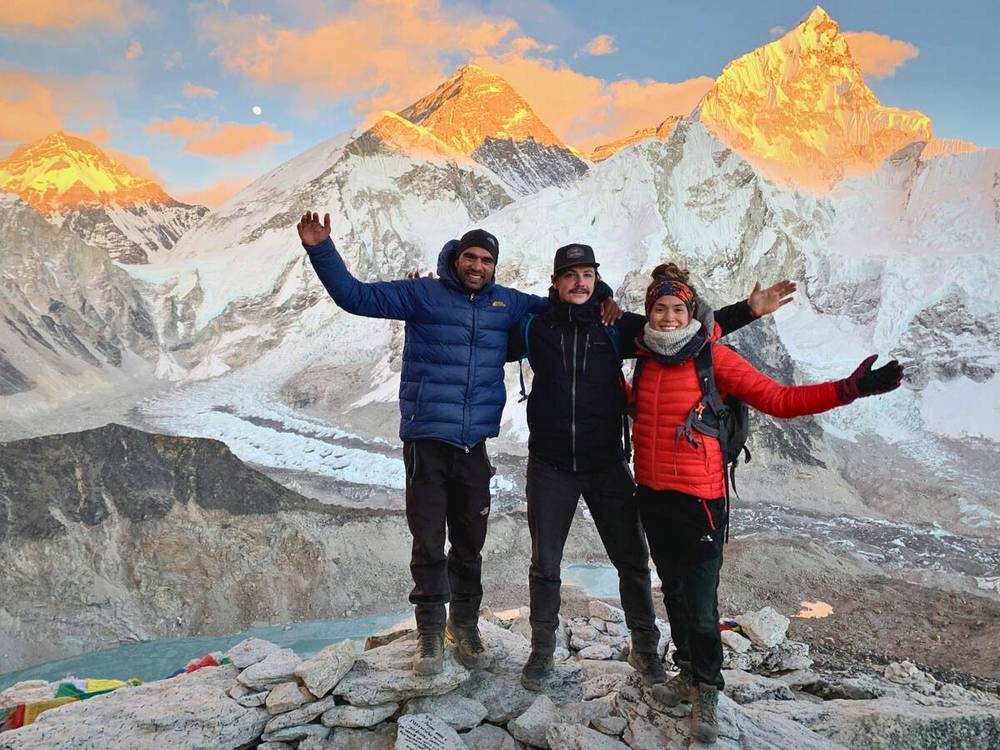
Everest Base Camp Trek - 14 days
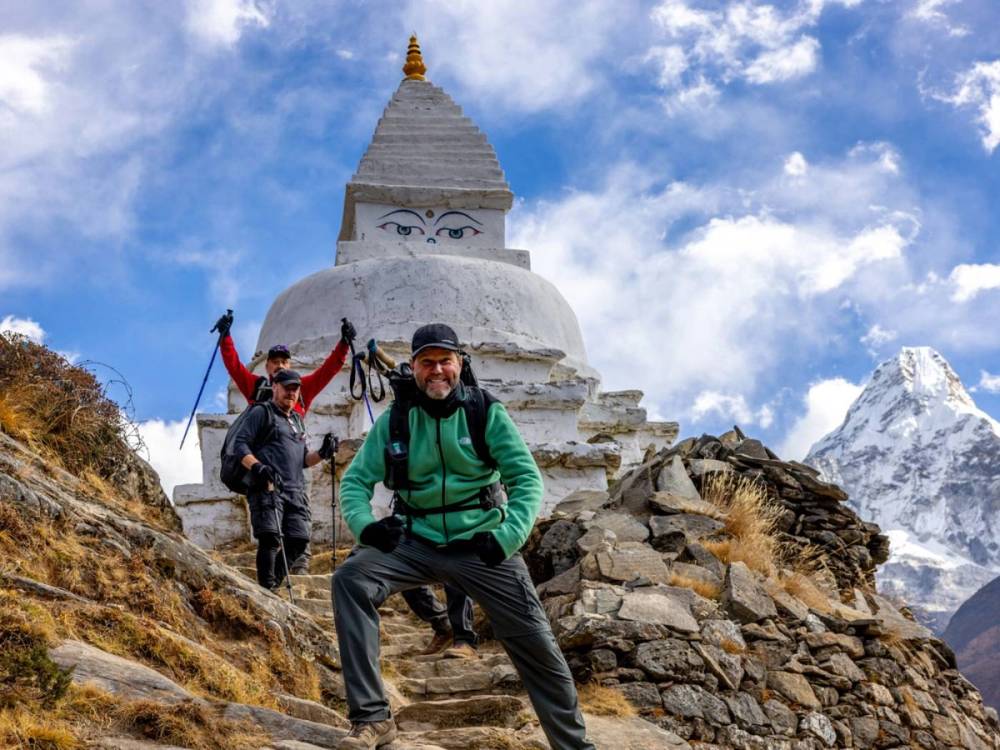
Everest Base Camp Luxury Trek - 14 days

Gokyo to Everest Base Camp Trek - 17 Days

Everest Three Passes Trek - 20 Days

Island Peak Summit - 15 Days
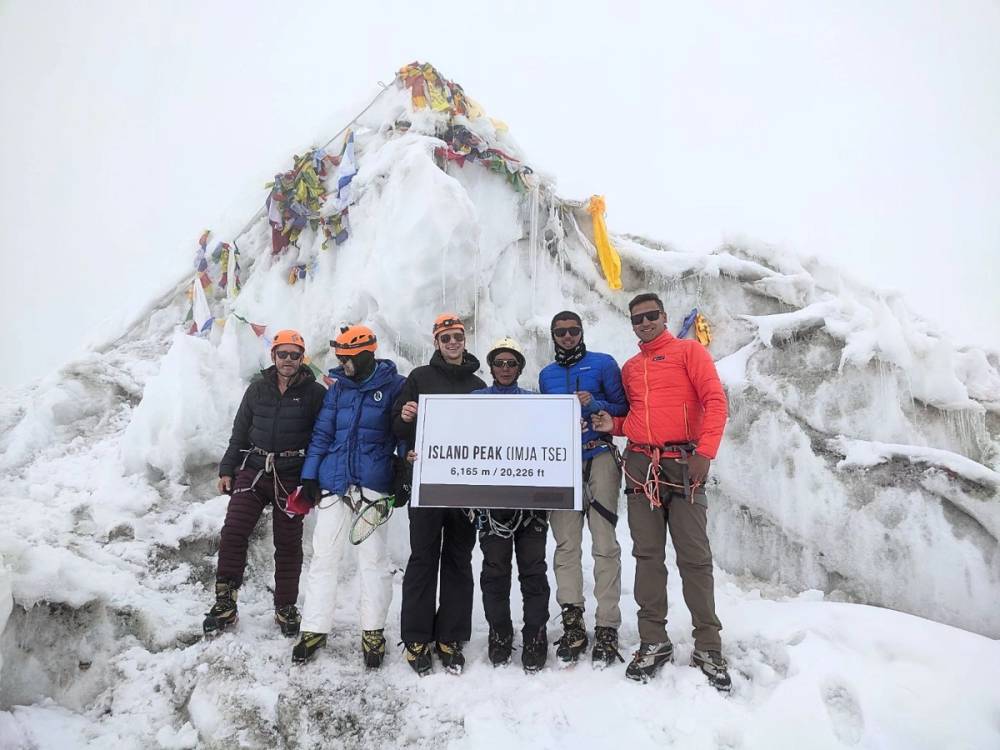
Everest Base Camp with Island Peak - 19 days
